Ready-to-Move vs Under-Construction Property: Which One to Choose?
Compare ready-to-move vs under-construction property, costs, GST, home loans and benefits to make the right property investment decision with Investormart.
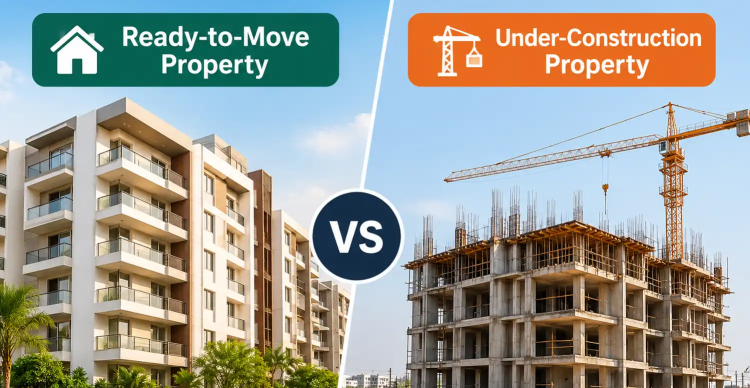
When you are considering purchasing a home, you're not solely looking for the right location or price comparison. The option of ready to move vs. under construction property can have a huge impact on your finances, monthly living costs and when you will be able to move in and occupy your home. A property that is ready for move-in will cost more, an under construction property may cost less and provide for step by step payments. The final calculation may vary, however, with other costs like the GST, rental, interest on loan and other charges.
So, which option is more cost-effective? It is dependent on your budget, length of time and intended use of the property.

Ready-to-Move Property: Immediate Possession With Greater Certainty
A ready to move house is a home that is already finished and can be moved into after the legal and documentation completion process. As the finished product is there for buyers to inspect, they can view the room size, natural light, ventilation, views, fittings and construction before deciding to make a purchase.
The advantage noticeably is there is not any construction lookout time. When you have someone else paying rent, going into this new home can get rid of that monthly bill. If you are buying an investment property, you can also begin to collect rental income earlier.
But, the ready home can cost more than an equivalent home that is yet to be built. There's also not much that buyers can do about structural changes or how to make the layout their own.
Who Can Consider a Ready-to-Move Home?
-
This may be an option for customers that:
-
Must be ready for a home in a short period of time.
-
Have a large debt
-
Like to view the end result before buying a property
-
Want to avoid construction-related uncertainty
-
Have enough cash to make a higher initial payment

Under-Construction Property: Lower Entry Cost, Longer Waiting Period
An under construction property is a property that is sold before the project is finished. Most developers accept payments in installments in line with the building process, giving the buyer time to spread out their financial investment.
The first price might be less than a similar finished home. There could also be more room for the buyers to choose some of the finishes, or make some allowable changes, in the initial phases of construction.
The compromise is the time. It can take many years to be in possession, depending on the development programme of the project. Buyers can make rent payments during this time, in addition to their home loan payments. These costs can escalate even more if the construction is delayed.
The payment schedule is therefore one of the considerations for buyers who are considering under construction property vs ready to move.
Comparing the Total Cost
An under construction home may seem like it is going to be less expensive if you only consider the advertised base price. A better way would be to work out what you expect you'll be spending in total before and after possession.
Let us consider an assumption. A readymade property will cost around ₹1.15 crore, whereas the similar under-construction property will be available for ₹1 crore. The difference of ₹15 lakh looks very promising initially.
However, there may be other costs involved in the under construction property, including applicable GST, rent (if applicable), pre-EMI interest or interior or modification fees. In the meantime, the ready property may enable the purchaser to not have to pay rent until later, and to be able to use or rent the property right away.
The total charge may also be affected by other charges. These can include charges for stamp duty, registration, parking fees, maintenance deposits, preferential location fees, floor-rise fees and infrastructure charges.
So, the lower base price is not necessarily the lower total price.
GST and Tax Considerations
The other key difference between the two is the treatment of GST. Where the transaction completes or the property is occupied after the relevant completion or occupancy certificate, the final payment of the property is not subject to GST. However, the property being constructed may also be eligible for 10% or 15% GST charges based on the category of the residential property.
Since there is variation in terms of taxes and charges in different projects, buyers must familiarize themselves with current taxation laws and must also ask for the cost sheet from the developers before paying anything.
Also, ensure that any property charges are included in the quoted price. This ensures that a cheap property doesn't suddenly turn out to be a costly one down the road.

Home Loans, Pre-EMI and Interest Costs
The economics of an under construction purchase can be significantly impacted by the structure of the loan. Lenders often provide the approved amount to a developer in increments based on the work completed.
In this period, a buyer can pay the pre-EMI that is normally the interest on the amount already disbursed. The interest load may grow as more is withdrawn.
In contrast, a ready property typically involves lending at the time of purchase and start of regular emi payments as per the loan term.
It's important to figure out the interest you'll be paying during the waiting period, not just the monthly payment.
Also Read:

Hidden Costs That Can Change the Decision
There are some lesser costs that can have a significant impact on the total bill.
Rent during construction
If the property is rented throughout construction, then the total rent paid prior to the property being occupied is included in the effective cost of buying the property.
Interior expenses
A ready property could already have a large amount of the fittings, while an under-construction property might need to be readied for occupation after purchase and that means extra expenses.
Maintenance and deposits
Developers may ask for advance maintenance or other deposits at or close to possession.
Location charges
Other factors such as higher floors, preferred views, corner units and others may result to an additional charge.
Opportunity cost
An expense that is paid up front and is not available for other uses till it is spent or can be productive. This is especially important if the building doesn't finish as quickly as anticipated.
Conclusion
There are benefits and drawbacks to both types of homes, and it will come down to your financial situation and timeline when deciding whether to go with a ready-to-move home or an under-construction one. The advantages of a ready property are that it is immediately available and more certain, the benefits of an under-construction property are that they may offer a lower entry price and flexible payments. Before choosing, weigh the total acquisition cost, time to hold, financing requirements and real-world advantages to see which is the right option for you.