How to Verify Property Documents Before Paying Token Money
Before paying token money, verify property ownership, title deeds, encumbrances, taxes and RERA details. Follow this guide from Investormart for safer buying.
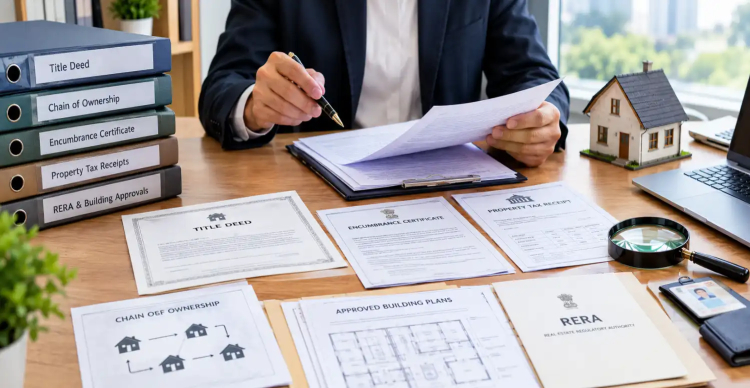
Token money is a small investment that is needed when you are going to start buying a house. The sum might not be a huge difference in the overall cost of the home, but it's better to pay it up front rather than when you review the paperwork to prevent unwelcome legal and financial complications. Property document verification is essential for the buyer to ensure that it is theirs, that there are no outstanding liabilities and that the property can be sold legally.
A seller may make copies of documents available to buyers during negotiations but buyers should not assume that the information contained in the documents provided to them is complete. Records important information should be verified with official records, and review the original documents where possible.

Why Document Verification Matters Before Paying Token Money
There is more to a property transaction than just checking the seller's name. The property may already be mortgaged, unpaid taxes may be outstanding, there may be disputes over ownership, construction may have been done without permission, or any number of other legal issues.
It can also be hard to get token money back when the agreement doesn't specify when it needs to be returned. As a result, document checks should be performed prior to any advance payment.
The first step is to determine who the legal owner of the property is and if that person is authorized to sell it.

Documents Every Buyer Should Check
Title Deed
The title deed is the basis for the transfer of ownership rights of the seller to the property. See if the name, property description, area, etc., correspond to the property that is being sold.
Request to see the original document and then check it against the seller's ID. If more than one owner, ensure that all suitable parties are engaged in the transaction.
Chain of Ownership
History of the property may give indications of issues that might not be apparent in the sale deed. Check past sale deeds and other documents of origin to clarify the transfer of ownership from one person to another.
If there is a missing link in this chain, further investigation should be completed before moving ahead.
Encumbrance Certificate
An Encumbrance Certificate (EC) may be used to determine if there are registered mortgages or claims against a property or encumbrance for the period of the EC. The buyer is expected to get the relevant EC from the relevant Sub-Registrar Office or the portal of the property or land records of the State administration.
Please note that just because the EC is old, it does not mean that there are no present liabilities. Extremely careful consideration should be given to the period covered and to the latest available records.
Property Tax Receipts
During a transaction the unpaid property taxes can be a problem. Examine the current Municipal tax receipts and see if there are any outstanding dues.
When purchasing an apartment, determine the maintenance fees and other fees associated with the society or association.
Approved Building Plans and RERA Details
In case of respective projects, check the registration and project information from the state's RERA office. Buyers should also review building plans that have been approved, and other necessary permissions, to establish if the property has been granted the necessary statutory approvals.

How to Conduct a Property Document Check
To begin, check and match the owner's identification documents with the ownership records. Then check the original title deed and deeds in support of it and not just based on the images and/or scanned copies.
Then, check with the proper government agency for an encumbrance search. Find out if the land is pledged or mortgaged, or registered claims, have affected the property.
Next, the check is made with the municipal tax and in the case of residential projects, the society tax on utilities as well. These checks can help avoid unwanted financial liabilities following the buying of the vehicle.
Property title search is also of great importance in this place. A local expert solicitor could check the title deeds, the sale deeds, approvals, any encumbrance records and more to ensure that there are no inconsistencies that a typical buyer would miss.

How to Pay Token Money Safely
After documents are reviewed, don't consider the token payment to be a casual transfer. Make a written receipt or preliminary agreement that documents:
This includes the property description and the sum agreed. This contains property information and the sum agreed.
-
Property details and total agreed price
-
Token amount being paid
-
Payment method and date
-
Expected timeline for the final transaction
-
Conditions under which the token amount will be refunded
-
Consequences if either party fails to proceed
You can start playing for free in the game and keep doing so until you win a prize. This is usually safer than using cash. It's also advisable for buyers to refrain from transferring funds to a third party until they have determined their legal relationship with the transaction.
The amount of tokens given should correspond to the size of the entire transaction. Most importantly, buyers should refrain from putting on any significant deposit just because the seller is pushing them to purchase the property on a rush basis.
Also Read:
When Should You Delay the Payment?
There are some indicators that should raise further questions. These include loss of original documents, inconsistent names, inconsistencies in property information, unexplained gaps in ownership, litigation, unpaid dues, or pressure to make an immediate cash payment.
Withholding the token payment may be justified until the matter is settled if the seller refuses reasonable checks of the documents, or does not allow independent legal checks, or if the seller is not prepared to allow the documents to be checked in any other way.
Final Words
Trust and oral agreements should never be the basis of a home purchase. In the case of legal verification of property prior to token money payment, it enables the buyers to detect problems of ownership, financial responsibilities and gaps in documentation that could still be reconsidered. Next steps in the purchase process can be made easier with a careful verification process, and legal and financial complications can be avoided.